Tuesday, June 26, 2012

The Truth About Medicaid and Medi-Cal Paying for a Nursing Home


Are you a Senior Who is Afraid of Running Out of Money?

Do you worry about the cost of long term care if you or your spouse can not live at home any longer?

Nobody ever wants to be put in nursing home?  The reality is that many seniors end up having to go to a nursing home (sometimes called a skilled nursing facility, SNF or convalescent home).  Families are shocked when they find out that the cost of staying in a nursing home is $225-$300/day!

  • Are there any government programs to help defray this cost?
  • Does a family have to spend all of their money before they can become eligible for a program?
  • Is there a way to preserve any of a seniors' money and still get government assistance? 
  • Are adult children responsible to pay back the government from the inheritance if their parent receives Medicaid or Medi-Cal?

Sometimes a senior needs to be admitted into a nursing home for rehabilitation services, mom falls and breaks her hip or dad has a stroke.  Sometimes it is because a senior simply can no longer live at home alone safely due to their inability to take care of themselves.  As we age most of us will need assistance with what is called our daily living activities.  

With costs of staying in a San Diego California nursing home for only a few months costing tens of thousands of dollars, most families want to know if there is any help to pay for this.

There is help - but you do need to plan for it!

The good news is that Medicaid or what California calls Medi-Cal will help pay for care received in a nursing home if the person who goes into the nursing home meets strict income and asset limits.  Basically the government will look at how much money you bring into your family from ALL sources as well as how much money (property and savings) a family has.  If you fall below a certain amount then the government will help pay.  If you are over their set limits,  then you are on your own and have to pay on your own! 


Please note that a person can be charged with Elder Abuse if they transfer money from a senior - even their parents - unless they have the property authority to do so! 

There are things you can do even if you have too much money to qualify for Medicaid and Medi-Cal!


There are quite a few strategies that one can use to preserve their hard earned money and property.  The only kicker is that this needs to be done while you still are competent and know what you are doing.  In other words, your kids can not decide after you are unable to make you own decisions to take steps to save your money unless you have already given very specific instructions and the OK to do so in your estate planning documents.  

Most people I speak with want to save their money and property including their home for their husband or wife and then for their children rather than spend it all on a nursing home in the last few years of their life.

Each family is different and what works for one may not work for another

Since each family is different, a plan that works for one family may not be right for another family.  The only way to know what is right for your family is to meet with an experienced Elder Law Attorney who knows the rules and how to legally get you qualified for Medicaid - Medi-Cal and how to avoid having to pay the government back for the services received once you pass away!

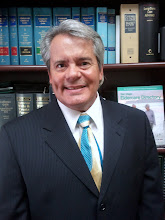
Free Phone Consult with Elder Law Attorney Vincent M. Casiano, Esq.

I know how confusing this can be, so I do offer to speak with potential clients at no charge to talk to them about their family's situation to see if I am able to help.  I welcome calls from wives, husbands, and adult children that are concerned about their parents' health and safety.  Call me so we talk and we can decide if you want me to help your family - 619-800-6820.  


Monday, May 21, 2012

Understanding a Family Member with Alzheimers


What Can I do to Understand What My Family Member with Alzheimer's is Going Through? 

Of course, you will never totally comprehend it, and you'll never totally be able to feel it...mainly because your family member will never totally understand it, not to mention be able to express his or her feelings about Alzheimer's.


There may be more challenging things in the world than caring for an Alzheimer's patient...but not many of them.  And, unfortunately, your path towards a better awareness of what your loved one is going through and what they are feeling must be based in the recognition that you'll never fully know.


Alzheimer’s disease is a permanent, progressive brain disease that gradually ruins memory and thinking skills, and ultimately even the capability to perform the simplest tasks. For most people with Alzheimer’s, signs or symptoms first appear after age 60. Estimations vary, but experts suggest that approximately 5.1 million Americans might have Alzheimer’s disease.


Alzheimer’s disease is among the most frequent cause of dementia among seniors. Dementia is the loss of cognitive functioning-thinking, recalling, and reasoning-and behavioral capabilities, to such an degree that it interferes with a person’s day to day life and activities. 


Dementia ranges in severity from the earliest stages, when it is just beginning to affect a person’s functioning, to the most severe stage, when the person must depend completely on other people for basic activities of daily living.
The Good News!

Despite the fact that Alzheimer's is not yet fully understood by the medical community much less the general public, the good news is that resources can be found to provide you with options to assist you in helping your loved one that is afflicted with this disease; there are tons of articles, thousands of discussion, and numerous organizations and institutions are studying it; in fact more than ever before.


One can learn great deal about what your loved one is feeling by joining caregiver support group. (And you will also benefit from the realization that there are many other folks in the same situation that your family is in and that certainly there are so many others dealing with the similar circumstances that you are!) Other great resources include the local Alzheimer's Association (alz.org), and the local Area Agency on Aging.  Among the best resources is National Institute on Aging, part of The National Institutes of Health (http://goo.gl/bqWwg).


If I listed every resource with information on Alzheimer's, I would need an entire website and not just a blog post.  There are also a vast number of books available and I recommend that you contact the Alzheimer's Association for the ones that they recommend.  Another way to find books on Alzheimer's is to go to Amazon.com and simply type in Alzheimer's in the search box. You could literally spend years reading the Internet articles and books that are out there regarding Alzheimer's.

Solutions!

One of the problems with simply doing your own research however, is that none of these resources can tell you what the best course of action is to take for your family. The absolute best way to develop a plan to achieve your families objectives is to consult with an elder law attorney who is experienced in assisting families with loved ones who have dementia. Oftentimes families are not even aware of some of the issues that exist or will develop when a loved one has Alzheimer's. An elder law attorney will review your family's unique situation, discuss and come to an understanding of what your objectives are, explain the law surrounding long-term care, estate planning and public benefits planning (Medicaid, Medi-Cal, Veterans Benefits, and then provide you with various options to achieve your families objectives.


At the Casiano Law Firm, I have devoted my practice deserving seniors and their families with all the legal issues that arise as one grows older. I can assist families with loved ones suffering from Alzheimer's with professionalism and trust, and most of all with compassion, and, at the appropriate interval. In addition, I can also assist, and often time the solutions I will present include comprehensive estate planning, wills, trusts, powers of attorney, long-term care planning, protection of family assets, inheritance preservation and issues with Medicaid, Medi-Cal and Veterans Benefits.

Remember, you do not have to do this alone.  I offer a no fee phone conversation, where we can talk about your family's unique situation, before you agree to come in for an in-depth consultation.  Remember, I am here to help; all you need to do is to give me a call.  619-800-6820.  

Elder Law Attorney Vinny Casiano at the San Diego End of Life Expo


Saturday, May 5, 2012

Do It Yourself Estate Planning


This post is a follow up to my article a couple of week ago "Purchasing Estate Planning Documents over the Internet Vs. Hiring an Attorney".  

The Do It Yourself Estate Planning advocated by Suzie Orman and Legal Zoom and Quicken are just not worth it!  

While persons having "simple" estates and in California what I mean by that is they do not own any real property and the GROSS value of their estates is less than $150,000, may be able to get away with using a do it yourself kit, the possibility of not getting it right is not worth the savings of a couple of hundred of dollars.

Wills in all states have very specific criteria on the language that needs to be used and the way they are signed.  Just as importantly, Wills only apply to assets (meaning property and accounts) that do not have a valid beneficiary designation.  Failure to understand these concepts and not following the strict formalities in signing your estate planning documents result in those documents being invalid.  This could very well result in your loved ones fighting over your plan and/or having to spend thousands of dollars to go to court to straighten everything out.

See the American Bar Association's Real Property and Probate Sections' task force report on Do It Yourself Estate Planning:  http://goo.gl/7OFVV

Just as importantly such Do It Yourself Plans do not address what happens if you need long term care before you die!


Most people would much prefer to preserve at least some of their property for their spouse and children rather than spending it all on long term care costs in the last years before they die.

U.S. Department of Health and Human Services says that people who reach age 65 will likely have a 40 percent chance of entering a nursing home. About 10 percent of the people who enter a nursing home will stay there five years or more. 

The cost of a nursing home care in California ranges from a minimum of $6,000 to upwards of $9,000.  Medicare may pay for the first 20 days and will partially, but rarely pay for the next 100 days (co-pay of $145/day).  Doesn't it make sense to seek the advice of an experienced elder lawyer to deal with these issues rather than leaving it to chance?

At the Casiano Law Firm - we know elder law and how to create estate plans to address concerns over long term care issues, nursing home costs, irresponsible children, children with special needs among many other issues.  We do not use forms for a one size fits all plan.  We do have a variety of plans so that our clients can decide, after an explanation of various options what they need or don't need and the plan is priced according to the options a family chooses.  In other words our clients get to choose the price they want to pay! 


Feel free to give Vinny Casiano a call for a no-charge phone consult to see how we can help your family with the some of the most important decisions one can make.  619-800-6820


Friday, April 20, 2012

Purchasing Estate Planning Documents over the Internet Vs. Hiring an Attorney


Potential clients are being bombarded with marketing from Legal Zoom, Nolo Press, Quicken and the likes of Suzie Orman to obtain their estate planning documents from the internet or from do it yourself software as opposed to hiring a lawyer to create an estate plan.  The assumption made is that the lawyer is simply selling you forms that you can get yourself. 

So if you can cut out the lawyer you can save thousands of dollars.  Right?!?  Wrong!!!!!

The value of hiring an elder law and estate planning attorney rather than purchasing forms over the internet is that an experienced attorney does not simply sell you forms.  A good estate planning attorney will listen to your goals and desires, analyze your individual circumstances, provide you with various option to achieve your goals and incorporate them into your plan. There is absolutely no way answering questions on a website form can possibly do this. 

Unfortunately, companies that offer quick internet legal forms provide a false sense of security to those customers that use them. 

The customers believe they have dealt with their estate and long term care planning issues and that their affairs are in order. 

There is nothing further from truth!!!!!!!

Every week I consult with clients, who show me estate planning documents that do not achieve their objectives, although they certainly believed they did when they paid for them.  Trusts, powers of attorneys and advance health care directives which are not customized to a client's individual needs, almost never achieve the objectives sought.  Unfortunately, it is often times too late to redo these documents if a person no longer has the ability to handle their own affairs.   

In a nutshell the advantages of hiring an attorney over buying documents from a service or buying do it yourself estate planning software are as follows: 

1) Analyze: Attorneys analyze a client's situation and identify issues that need to be addressed in an estate and long term care plan by first listening to their client's desires and objectives;
2) Advise: Attorneys provide advice and guidance to their clients by recommending solutions and provide options to achieve the client's goals; 
3) Customize: Attorneys customize the documents for their clients to incorporate the solutions the clients have chosen to achieve their objectives;
4) Ensure: Attorneys ensure that the documents are signed in accordance with the strict formalities that are required by Law;
5) Advocate: Attorneys serve as advocates for their clients in dealing with financial institutions, governmental agencies and other business professionals; and
6) Care:  Most importantly, Attorneys care about a client and their families.

In essence there is no comparison between hiring an attorney and using a service to buy the most important and essential planning that one needs to do to protect themselves and their families.

Questions - give my office a call. Vinny Casiano, Elder Law Attorney  619-800-6820.


Thursday, March 1, 2012

Small Estate Affidavit Allows for Non-Probate Transfers of Assets

After a trust is created, it is important to transfer title to assets that you intend to have distributed pursuant to the terms of the trust into the name of the trust. This is referred to as “funding” the trust, and ensures that these assets will pass in accordance with the terms of the trust, without the need for probate administration.

Occasionally, however, during the course of the administration of a trust or estate, we will discover that an asset has been inadvertently left out of the trust. For example, a small bank account may be titled solely in the name of the decedent, without a beneficiary named on the account. What happens to this account? Does it go through probate?

If the total value of the decedent’s nonprobate estate, including the account in question, has a value of less than $150,000, it may be transferred to the successors of the decedent without the need to initiate a probate proceeding with the probate court. Title to real property may not be transferred using this procedure. The decedent’s entire estate must meet the qualifications of California Probate Court Sections 13100-13115. To learn whether it is possible to transfer a small estate or an asset without a formal probate proceeding, contact the Casiano Law Firm in San Diego.

Unfortunately, some clients have experienced difficulty in getting banks and financial institutions to recognize the validity of the small estate affidavit, and some banks are notorious for insisting that a probate court order is required to transfer an account to the successors. If the holder of the property refuses to honor a valid affidavit, the affiant can bring a statutory action to against the holder compel payment, transfer or delivery of the property, and the holder may be liable for any resulting attorneys’ fees and costs incurred by the affiant in bringing the action.

Experienced Estate Planning Attorney in San Diego

For experienced assistance with trust or estate administration, or to learn whether it is possible to transfer the assets of an estate without probate, contact the Casiano Law Firm. We offer representation in estate planning, probate and trust administration for clients throughout the San Diego area.

Tuesday, January 31, 2012

Time to Review Your Estate Plan and Other Tips

The beginning of a new year is an excellent time to review your existing estate planning documents and think about whether you need to update them in light of changes in your personal or financial circumstances, or in light of recent tax law changes. It is generally advised that you review your estate planning documents every 3-5 years, or sooner if any of the following events have occurred:


  • Death of a family member, beneficiary, or fiduciary named in your documents

  • Birth/addition to the family

  • Incapacity or serious illness of a family member, beneficiary, or fiduciary

  • Divorce or separation

  • Retirement

  • Inheritance

  • Loss of job or income

  • Change in business ownership

  • Other substantial change in your finances


Make Sure You Provide Safe Deposit Box Information

Many people keep their valuable documents, including their original estate planning documents, in their safe deposit box. Does your successor trustee of your trust or executor of your will know where your safe deposit box is located? Have you given your successor trustee or executor the key to the box and added them to the signature card to be able to access the box in the event you pass away or are incapacitated? It is advisable to keep your Advance Health Care Directive in an accessible place other than a safe deposit box in the event of a medical emergency, because an emergency may arise when the bank is closed.


Make Sure You Provide Passwords and Log-in Information for Electronic Accounts

More people are switching to online banking and investing online, and fewer people are opting to have statements mailed to them. If you were to pass away or become incapacitated, would your successor trustee or executor know how to access your online account? Would they even have access to your e-mail to check for statements as they come in? It is important to make sure your successor trustee or executor have access to your e-mail and any online retirement benefit, bank, mutual fund, stock, or other investment accounts. Give them a list of your accounts, login names and passwords.


Experienced Estate Planning Attorney in San Diego

The Casiano Law Firm offers experienced assistance with estate planning for clients throughout the San Diego area. Call or e-mail us for assistance in preparing wills, trusts, powers of attorney or advance health care directives, or for representation in probate or trust administration.

Thursday, December 29, 2011

Estate Tax Planning for 2011, 2012, and Beyond

As we enter 2012, time is running out to make all of your gifting, planning, and other tax-related decisions which will impact tax year 2011. With the start of the new year, it is also time to consider planning for the 2012 tax year. There is a sunset on the horizon, but it is not as pretty to look at as most. It is the sunset of the "Bush tax cuts," which were extended through 2012 by legislation in 2010. What lies beyond 2012 is too far beyond the horizon to see just yet, and much depends on how Congress deals with the impending change, assuming Congress deals with it at all.

Estate and Gift Tax Exemption

For 2011 and 2012, a $5 million exemption from estate and gift taxes is in place. This unified tax credit is per person, so proper planning between married couples can create an effective $10 million exemption. Estates above the exempted amount are taxed at a 35% top rate. If nothing changes, however, for 2013 and thereafter, the exemption would drop to $1 million, with a top tax rate of 55% for amounts above the exemption.

Will Congress continue the current exemption beyond 2012, or allow it to drop to the $1 million level of a decade ago? Will Congress eliminate the estate tax altogether, as it briefly accomplished for 2010, or will some compromise figure be reached, such as a $3.5 million exemption with a 45% tax rate? It may be too early to tell, but it is not too early to plan. If your estate lies between $1 million and $10 million in value, it may be wise to consider reducing the size of your taxable estate through charitable giving, the establishment of trusts, and other available mechanisms. Schedule some time to talk over your estate plan with a knowledgeable and experienced estate planning attorney, who can advise and assist you with immediate and long-term planning. In San Diego, contact the Casiano Law Firm for assistance.