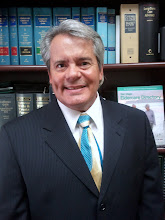
Showing posts with label Medicaid. Show all posts

Friday, December 7, 2012

Medicare Premium Rise Lower Than Expected

Good News For Seniors!  As an Elder Lawyer almost all of my clients over the age of 65 and those clients with disabilities rely on Medicare for their health care needs.  

The Centers for Medicare and Medicaid has announced the new Medicare premiums, deductibles, and coinsurances. The standard Medicare Part B premium is increasing by $5 to $104.90 a month, smaller than the $9 per month increase predicted earlier in the year.


Social Security recipients will receive a 1.7 percent increase in payments in 2013. Most people have their Medicare premiums deducted from their Social Security benefits. The smaller-than-expected hike means that most Medicare recipients will still receive a modest boost in Social Security benefits. 
Here are all the new Medicare figures:
  • Part B premium: $104.90/month (was $99.90)
  • Part B deductible: $147 (was $140)
  • Part A deductible: $1,184 (was $1,156)
  • Co-payment for hospital stay days 61-90: $296/day (was $289)
  • Co-payment for hospital stay days 91 and beyond: $592/day (was $578)
  • Skilled nursing facility co-payment, days 21-100: $148/day (was $144.50)
As directed by the 2003 Medicare law, higher-income beneficiaries will pay higher Part B premiums. Following are those amounts for 2012:
  • Individuals with annual incomes between $85,000 and $107,000 and married couples with annual incomes between $170,000 and $214,000 will pay a monthly premium of $146.90 (was $139.90).
  • Individuals with annual incomes between $107,000 and $160,000 and married couples with annual incomes between $214,000 and $320,000 will pay a monthly premium of $209.80 (was $199.80).
  • Individuals with annual incomes between $160,000 and $214,000 and married couples with annual incomes between $320,000 and $428,000 will pay a monthly premium of $272.70 (was $259.70).
  • Individuals with annual incomes of $214,000 or more and married couples with annual incomes of $428,000 or more will pay a monthly premium of $335.70 (was $319.70).
Rates differ for beneficiaries who are married but file a separate tax return from their spouse:
  • Those with incomes between $85,000 and $129,000 will pay a monthly premium of $272.70 (was $259.70).
  • Those with incomes greater than $129,000 will pay a monthly premium of $335.70 (was $319.70).
The Social Security Administration uses the income reported two years ago to determine a Part B beneficiary's premiums. So the income reported on a beneficiary's 2011 tax return is used to determine whether the beneficiary must pay a higher monthly Part B premium in 2013. Income is calculated by taking a beneficiary's adjusted gross income and adding back in some normally excluded income, such as tax-exempt interest, U.S. savings bond interest used to pay tuition, and certain income from foreign sources. This is called modified adjusted gross income (MAGI). If a beneficiary's MAGI decreased significantly in the past two years, she may request that information from more recent years be used to calculate the premium.

Those who enroll in Medicare Advantage plans may have different cost-sharing arrangements. On average Medicare Advantage premiums are expected to rise $1.47 per month in 2013. 

If you have any questions regarding your rights under Medicare, Medi-Cal (called Medicaid) or Aid and Attendance Benefits give my office a call and I will speak with you free of charge to see if I can help.  

Best,
Vincent M. Casiano, Esq.
619-800-6820
CasianoLawFirm1@gmail.com


Wednesday, June 27, 2012

Medicare Savings on Prescription Drugs for Seniors as a Result of the Affordable Care Act


According to the Centers for Medicare and Medicaid Services More than 5.2 million Medicare beneficiaries have saved a total of $3.7 billion on their prescription drugs since the health care reform law (a.k.a. Affordable Care Act a.k.a. "Obama Care") went into effect.   The Affordable Care Act—also known as health care reform—which passed in 2010, required financial assistance for seniors who fall into Medicare's so-called "donut hole." As a result of health care reform, Medicare beneficiaries who fell into the donut hole in 2010 received $250 as a one-time, tax-free rebate to help pay for their prescription drugs. Even more relief came into effect in 2011 as the law also required that those Medicare beneficiaries who fell into the donut hole because of high prescription drug costs should receive a 50 percent discount on covered brand-name drugs, and 7 percent coverage of generics.

See CNN Article: http://money.cnn.com/2012/06/25/pf/health-reform-medicare/

Polls show that more Americans are opposed to the Affordable Care Act than those that approve it.  Some commentators claim this is because opponents have spent 235 Million dollars in ads criticizing the law where only 69 Million has been spent in ads supporting the law. 

See New York Times Report: http://www.nytimes.com/2012/06/21/health/policy/health-care-law-loses-ad-war.html?_r=1&em

On the other hand see the benefits of the law: http://www.whitehouse.gov/the-press-office/2012/03/23/new-report-affordable-care-act-gives-americans-more-security-better-bene
The nation eagerly await the Supreme Court's decision regarding the constitutional challenges initiatedby Republicans and conservatives alike. The Affordable Care Act has an "Individual Mandate" that requires everyone to have insurance coverage or they will be fined. Provisions are included in the Act to subsidize insurance coverage for those who can afford it. The rationale behind this is that everyone has a basic right to healthcareand that it will be less costly if everyone is covered. Opponents claim that the requirement force people to buy an insurance policy is unconstitutional and that the federal government does not have the right to force people to do this. However, the commerce clause, has been used in scores of cases as a constitutional basis for the federal government to enact laws where the economic affect of the law crosses state lines.


Attorney Casiano founded the Casiano law firm in San Diego Elder Law and Estate Planning Firm to serve the needs of seniors and their families with the complex legal issues that arise as one grows older.  If you have any questions regarding your Medicare, Medicaid, or Medi-Cal coverage, feel free to give "Vinny" a call at 619-800-6820 and he will speak to you at no charge to see if he can assist you.


Tuesday, June 26, 2012

The Truth About Medicaid and Medi-Cal Paying for a Nursing Home


Are you a Senior Who is Afraid of Running Out of Money?

Do you worry about the cost of long term care if you or your spouse can not live at home any longer?

Nobody ever wants to be put in nursing home?  The reality is that many seniors end up having to go to a nursing home (sometimes called a skilled nursing facility, SNF or convalescent home).  Families are shocked when they find out that the cost of staying in a nursing home is $225-$300/day!

  • Are there any government programs to help defray this cost?
  • Does a family have to spend all of their money before they can become eligible for a program?
  • Is there a way to preserve any of a seniors' money and still get government assistance? 
  • Are adult children responsible to pay back the government from the inheritance if their parent receives Medicaid or Medi-Cal?

Sometimes a senior needs to be admitted into a nursing home for rehabilitation services, mom falls and breaks her hip or dad has a stroke.  Sometimes it is because a senior simply can no longer live at home alone safely due to their inability to take care of themselves.  As we age most of us will need assistance with what is called our daily living activities.  

With costs of staying in a San Diego California nursing home for only a few months costing tens of thousands of dollars, most families want to know if there is any help to pay for this.

There is help - but you do need to plan for it!

The good news is that Medicaid or what California calls Medi-Cal will help pay for care received in a nursing home if the person who goes into the nursing home meets strict income and asset limits.  Basically the government will look at how much money you bring into your family from ALL sources as well as how much money (property and savings) a family has.  If you fall below a certain amount then the government will help pay.  If you are over their set limits,  then you are on your own and have to pay on your own! 


Please note that a person can be charged with Elder Abuse if they transfer money from a senior - even their parents - unless they have the property authority to do so! 

There are things you can do even if you have too much money to qualify for Medicaid and Medi-Cal!


There are quite a few strategies that one can use to preserve their hard earned money and property.  The only kicker is that this needs to be done while you still are competent and know what you are doing.  In other words, your kids can not decide after you are unable to make you own decisions to take steps to save your money unless you have already given very specific instructions and the OK to do so in your estate planning documents.  

Most people I speak with want to save their money and property including their home for their husband or wife and then for their children rather than spend it all on a nursing home in the last few years of their life.

Each family is different and what works for one may not work for another

Since each family is different, a plan that works for one family may not be right for another family.  The only way to know what is right for your family is to meet with an experienced Elder Law Attorney who knows the rules and how to legally get you qualified for Medicaid - Medi-Cal and how to avoid having to pay the government back for the services received once you pass away!

Free Phone Consult with Elder Law Attorney Vincent M. Casiano, Esq.

I know how confusing this can be, so I do offer to speak with potential clients at no charge to talk to them about their family's situation to see if I am able to help.  I welcome calls from wives, husbands, and adult children that are concerned about their parents' health and safety.  Call me so we talk and we can decide if you want me to help your family - 619-800-6820.  


Monday, May 21, 2012

Understanding a Family Member with Alzheimers


What Can I do to Understand What My Family Member with Alzheimer's is Going Through? 

Of course, you will never totally comprehend it, and you'll never totally be able to feel it...mainly because your family member will never totally understand it, not to mention be able to express his or her feelings about Alzheimer's.


There may be more challenging things in the world than caring for an Alzheimer's patient...but not many of them.  And, unfortunately, your path towards a better awareness of what your loved one is going through and what they are feeling must be based in the recognition that you'll never fully know.


Alzheimer’s disease is a permanent, progressive brain disease that gradually ruins memory and thinking skills, and ultimately even the capability to perform the simplest tasks. For most people with Alzheimer’s, signs or symptoms first appear after age 60. Estimations vary, but experts suggest that approximately 5.1 million Americans might have Alzheimer’s disease.


Alzheimer’s disease is among the most frequent cause of dementia among seniors. Dementia is the loss of cognitive functioning-thinking, recalling, and reasoning-and behavioral capabilities, to such an degree that it interferes with a person’s day to day life and activities. 


Dementia ranges in severity from the earliest stages, when it is just beginning to affect a person’s functioning, to the most severe stage, when the person must depend completely on other people for basic activities of daily living.
The Good News!

Despite the fact that Alzheimer's is not yet fully understood by the medical community much less the general public, the good news is that resources can be found to provide you with options to assist you in helping your loved one that is afflicted with this disease; there are tons of articles, thousands of discussion, and numerous organizations and institutions are studying it; in fact more than ever before.


One can learn great deal about what your loved one is feeling by joining caregiver support group. (And you will also benefit from the realization that there are many other folks in the same situation that your family is in and that certainly there are so many others dealing with the similar circumstances that you are!) Other great resources include the local Alzheimer's Association (alz.org), and the local Area Agency on Aging.  Among the best resources is National Institute on Aging, part of The National Institutes of Health (http://goo.gl/bqWwg).


If I listed every resource with information on Alzheimer's, I would need an entire website and not just a blog post.  There are also a vast number of books available and I recommend that you contact the Alzheimer's Association for the ones that they recommend.  Another way to find books on Alzheimer's is to go to Amazon.com and simply type in Alzheimer's in the search box. You could literally spend years reading the Internet articles and books that are out there regarding Alzheimer's.

Solutions!

One of the problems with simply doing your own research however, is that none of these resources can tell you what the best course of action is to take for your family. The absolute best way to develop a plan to achieve your families objectives is to consult with an elder law attorney who is experienced in assisting families with loved ones who have dementia. Oftentimes families are not even aware of some of the issues that exist or will develop when a loved one has Alzheimer's. An elder law attorney will review your family's unique situation, discuss and come to an understanding of what your objectives are, explain the law surrounding long-term care, estate planning and public benefits planning (Medicaid, Medi-Cal, Veterans Benefits, and then provide you with various options to achieve your families objectives.


At the Casiano Law Firm, I have devoted my practice deserving seniors and their families with all the legal issues that arise as one grows older. I can assist families with loved ones suffering from Alzheimer's with professionalism and trust, and most of all with compassion, and, at the appropriate interval. In addition, I can also assist, and often time the solutions I will present include comprehensive estate planning, wills, trusts, powers of attorney, long-term care planning, protection of family assets, inheritance preservation and issues with Medicaid, Medi-Cal and Veterans Benefits.

Remember, you do not have to do this alone.  I offer a no fee phone conversation, where we can talk about your family's unique situation, before you agree to come in for an in-depth consultation.  Remember, I am here to help; all you need to do is to give me a call.  619-800-6820.  

Elder Law Attorney Vinny Casiano at the San Diego End of Life Expo