Showing posts with label Medicare. Show all posts

Friday, December 7, 2012

Medicare Premium Rise Lower Than Expected

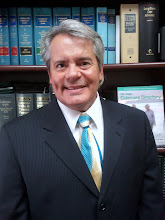
Good News For Seniors!  As an Elder Lawyer almost all of my clients over the age of 65 and those clients with disabilities rely on Medicare for their health care needs.  

The Centers for Medicare and Medicaid has announced the new Medicare premiums, deductibles, and coinsurances. The standard Medicare Part B premium is increasing by $5 to $104.90 a month, smaller than the $9 per month increase predicted earlier in the year.


Social Security recipients will receive a 1.7 percent increase in payments in 2013. Most people have their Medicare premiums deducted from their Social Security benefits. The smaller-than-expected hike means that most Medicare recipients will still receive a modest boost in Social Security benefits. 
Here are all the new Medicare figures:
  • Part B premium: $104.90/month (was $99.90)
  • Part B deductible: $147 (was $140)
  • Part A deductible: $1,184 (was $1,156)
  • Co-payment for hospital stay days 61-90: $296/day (was $289)
  • Co-payment for hospital stay days 91 and beyond: $592/day (was $578)
  • Skilled nursing facility co-payment, days 21-100: $148/day (was $144.50)
As directed by the 2003 Medicare law, higher-income beneficiaries will pay higher Part B premiums. Following are those amounts for 2012:
  • Individuals with annual incomes between $85,000 and $107,000 and married couples with annual incomes between $170,000 and $214,000 will pay a monthly premium of $146.90 (was $139.90).
  • Individuals with annual incomes between $107,000 and $160,000 and married couples with annual incomes between $214,000 and $320,000 will pay a monthly premium of $209.80 (was $199.80).
  • Individuals with annual incomes between $160,000 and $214,000 and married couples with annual incomes between $320,000 and $428,000 will pay a monthly premium of $272.70 (was $259.70).
  • Individuals with annual incomes of $214,000 or more and married couples with annual incomes of $428,000 or more will pay a monthly premium of $335.70 (was $319.70).
Rates differ for beneficiaries who are married but file a separate tax return from their spouse:
  • Those with incomes between $85,000 and $129,000 will pay a monthly premium of $272.70 (was $259.70).
  • Those with incomes greater than $129,000 will pay a monthly premium of $335.70 (was $319.70).
The Social Security Administration uses the income reported two years ago to determine a Part B beneficiary's premiums. So the income reported on a beneficiary's 2011 tax return is used to determine whether the beneficiary must pay a higher monthly Part B premium in 2013. Income is calculated by taking a beneficiary's adjusted gross income and adding back in some normally excluded income, such as tax-exempt interest, U.S. savings bond interest used to pay tuition, and certain income from foreign sources. This is called modified adjusted gross income (MAGI). If a beneficiary's MAGI decreased significantly in the past two years, she may request that information from more recent years be used to calculate the premium.

Those who enroll in Medicare Advantage plans may have different cost-sharing arrangements. On average Medicare Advantage premiums are expected to rise $1.47 per month in 2013. 

If you have any questions regarding your rights under Medicare, Medi-Cal (called Medicaid) or Aid and Attendance Benefits give my office a call and I will speak with you free of charge to see if I can help.  

Best,
Vincent M. Casiano, Esq.
619-800-6820
CasianoLawFirm1@gmail.com


Thursday, July 12, 2012

Seniors Benefit from the Affordable Care Act!

The Affordable Care Act, or ACA, referred to by some as Obama Care, provides some fabulous benefits for seniors!

Given that the Affordable Care Act, or ACA, has been upheld by the Supreme Court, seniors are in position to benefit much more on healthcare options.

The goal of ACA is to expand the healthcare options for all Americans - but with regards to seniors, your choices are much more "expandable." For instance, the majority of the guaranteed benefits under Medicare Parts A and Part B will be expanded...and none will be reduced.

  • A provision that could very well bring instant benefits is help with the Medicare Part D "donut hole," in the form of a $250 rebate.

The really great aspect of this added benefit is that if you qualify, you don't need to do anything at all to get your check; it comes automatically. Once a senior reaches their donut hole, they will receive a 50% discount on brand-name prescription drugs, and a 7% on generic drugs. If a senior is on Medicare, then they will be eligible for a free annual wellness exam.

Medicare Advantage plans must offer identical benefits provided under Medicare Parts A and B; such plans will continue to lower your out-of-pocket expenses for specific expensive services, and if you need extensive care. The ACA will ultimately lower payments to Medicare Advantage plans from the existing 14% profit-over-costs to 1% profit, with bonus payments to those plans with high ratings.

  • In case you are considering a Medicare Advantage Plan, search for one that has been operating for at least five years and that has received a high rating from Medicare.

Almost all seniors would rather receive medical care at home than living in a nursing home or skilled nursing facility (SNF). The ACA will provide monetary incentives to states offering assistance for those seniors to stay at home.  So if your state is considering not accepting funds from the federal government, you may want to contact your Governor and ask her or she, "Why Not?"

Wealthier seniors that have income in excess of specific amounts, will still need to pay more for Medicare Part B, in addition to Part D. In addition, seniors who are in this better financial position will be required to pay a higher Medicare tax rate that will now include unearned income from investments.

The ACA can be hard to understand. It's a mixture of medical jargon and legalese.

  • What the ACA does not do is eliminate the necessity to plan in advance for long-term care.

The only professional who can certainly assist you in coordinating a plan to pay for your long term costs and understands the consequences of this law is an Elder Law Attorney.

I have dedicated my practice to serving the needs of seniors and their families with the legal issues that arise as one grows older. I will speak with you personally at no charge to listen to your concerns and let you know if I can help.

Give me a call at 619-800-6820.

Best Regards,
Vincent M. Casiano, Esq.
Elder Law Attorney


Wednesday, June 27, 2012

Medicare Savings on Prescription Drugs for Seniors as a Result of the Affordable Care Act


According to the Centers for Medicare and Medicaid Services More than 5.2 million Medicare beneficiaries have saved a total of $3.7 billion on their prescription drugs since the health care reform law (a.k.a. Affordable Care Act a.k.a. "Obama Care") went into effect.   The Affordable Care Act—also known as health care reform—which passed in 2010, required financial assistance for seniors who fall into Medicare's so-called "donut hole." As a result of health care reform, Medicare beneficiaries who fell into the donut hole in 2010 received $250 as a one-time, tax-free rebate to help pay for their prescription drugs. Even more relief came into effect in 2011 as the law also required that those Medicare beneficiaries who fell into the donut hole because of high prescription drug costs should receive a 50 percent discount on covered brand-name drugs, and 7 percent coverage of generics.

See CNN Article: http://money.cnn.com/2012/06/25/pf/health-reform-medicare/

Polls show that more Americans are opposed to the Affordable Care Act than those that approve it.  Some commentators claim this is because opponents have spent 235 Million dollars in ads criticizing the law where only 69 Million has been spent in ads supporting the law. 

See New York Times Report: http://www.nytimes.com/2012/06/21/health/policy/health-care-law-loses-ad-war.html?_r=1&em

On the other hand see the benefits of the law: http://www.whitehouse.gov/the-press-office/2012/03/23/new-report-affordable-care-act-gives-americans-more-security-better-bene
The nation eagerly await the Supreme Court's decision regarding the constitutional challenges initiatedby Republicans and conservatives alike. The Affordable Care Act has an "Individual Mandate" that requires everyone to have insurance coverage or they will be fined. Provisions are included in the Act to subsidize insurance coverage for those who can afford it. The rationale behind this is that everyone has a basic right to healthcareand that it will be less costly if everyone is covered. Opponents claim that the requirement force people to buy an insurance policy is unconstitutional and that the federal government does not have the right to force people to do this. However, the commerce clause, has been used in scores of cases as a constitutional basis for the federal government to enact laws where the economic affect of the law crosses state lines.


Attorney Casiano founded the Casiano law firm in San Diego Elder Law and Estate Planning Firm to serve the needs of seniors and their families with the complex legal issues that arise as one grows older.  If you have any questions regarding your Medicare, Medicaid, or Medi-Cal coverage, feel free to give "Vinny" a call at 619-800-6820 and he will speak to you at no charge to see if he can assist you.


Saturday, May 5, 2012

Do It Yourself Estate Planning


This post is a follow up to my article a couple of week ago "Purchasing Estate Planning Documents over the Internet Vs. Hiring an Attorney".  

The Do It Yourself Estate Planning advocated by Suzie Orman and Legal Zoom and Quicken are just not worth it!  

While persons having "simple" estates and in California what I mean by that is they do not own any real property and the GROSS value of their estates is less than $150,000, may be able to get away with using a do it yourself kit, the possibility of not getting it right is not worth the savings of a couple of hundred of dollars.

Wills in all states have very specific criteria on the language that needs to be used and the way they are signed.  Just as importantly, Wills only apply to assets (meaning property and accounts) that do not have a valid beneficiary designation.  Failure to understand these concepts and not following the strict formalities in signing your estate planning documents result in those documents being invalid.  This could very well result in your loved ones fighting over your plan and/or having to spend thousands of dollars to go to court to straighten everything out.

See the American Bar Association's Real Property and Probate Sections' task force report on Do It Yourself Estate Planning:  http://goo.gl/7OFVV

Just as importantly such Do It Yourself Plans do not address what happens if you need long term care before you die!


Most people would much prefer to preserve at least some of their property for their spouse and children rather than spending it all on long term care costs in the last years before they die.

U.S. Department of Health and Human Services says that people who reach age 65 will likely have a 40 percent chance of entering a nursing home. About 10 percent of the people who enter a nursing home will stay there five years or more. 

The cost of a nursing home care in California ranges from a minimum of $6,000 to upwards of $9,000.  Medicare may pay for the first 20 days and will partially, but rarely pay for the next 100 days (co-pay of $145/day).  Doesn't it make sense to seek the advice of an experienced elder lawyer to deal with these issues rather than leaving it to chance?

At the Casiano Law Firm - we know elder law and how to create estate plans to address concerns over long term care issues, nursing home costs, irresponsible children, children with special needs among many other issues.  We do not use forms for a one size fits all plan.  We do have a variety of plans so that our clients can decide, after an explanation of various options what they need or don't need and the plan is priced according to the options a family chooses.  In other words our clients get to choose the price they want to pay! 


Feel free to give Vinny Casiano a call for a no-charge phone consult to see how we can help your family with the some of the most important decisions one can make.  619-800-6820